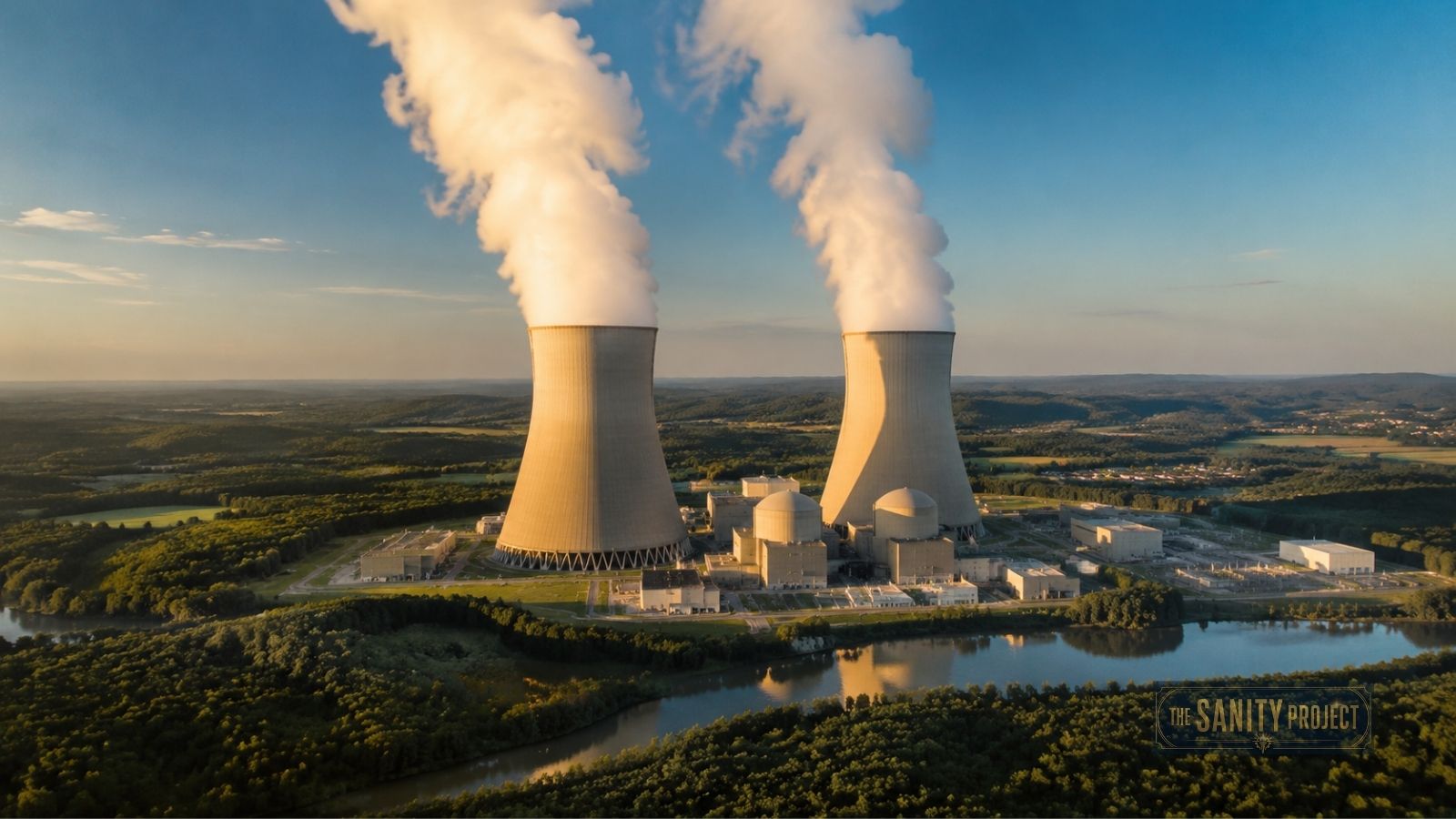
When 'Safe' Went Dark: How Germany's Nuclear Phase-Out Became a Cautionary Tale
In 2010, Germany’s power grid was an engineering marvel. Seventeen nuclear reactors hummed along flawlessly, delivering a third of the nation’s electricity with zero carbon emissions. It was, by any measure, one of the cleanest and most reliable power systems on Earth.
Then came March 2011.
A massive earthquake and tsunami devastated Japan’s northeastern coast, severely damaging the Fukushima Daiichi nuclear plant. The images were alarming. The global public response was swift and emotional. In Germany, Chancellor Angela Merkel made a decision that would reshape the nation’s energy landscape for the next twelve years: immediately shut down eight perfectly operational reactors and mandate a complete phase-out of the entire nuclear fleet.
From a pure engineering standpoint, the connection was almost nonexistent. Germany sits on no major fault line. It experiences no tsunamis. It operates entirely different reactor designs under far more stringent regulatory conditions than those that failed in Japan. But engineering data didn’t drive this decision. Political ideology did.
The Physics of a Vacuum
When you suddenly remove 33% of an industrialized nation’s power supply, the laws of physics don’t negotiate. The electricity has to come from somewhere.
Anti-nuclear activists and political leaders widely assumed that renewable sources—wind and solar—would seamlessly scale up to fill the void. But the scale of the deficit was simply too large. The rapid loss of baseload power—that consistent, always-on electricity a modern grid requires to function—forced Germany into an uncomfortable position. The government turned outward to foreign imports and relied heavily on existing fossil fuels.
In their drive to achieve what they believed was an environmental victory, activists inadvertently locked the country into burning vast amounts of highly-polluting brown coal.
This is the critical irony: a policy designed to protect the environment ended up doing the opposite.
The Data Arrives
We don’t have to speculate about what happened next. The numbers are in, and they’re unambiguous.
A 2025 forensic report by the Anthropocene Institute tracked exactly what replacement fuels Germany used between 2011 and 2023. The findings are stark: the phase-out caused an additional 730 million tons of CO₂ over twelve years. To put that in perspective, that’s more greenhouse gas than Germany produced in all of 2024. Ninety-eight percent of the lost nuclear capacity was replaced by burning coal.
But the climate impact, while staggering, tells only part of the story.
The Human Cost
According to landmark research in the British Medical Journal, ambient air pollution from burning fossil fuels accounts for over 5 million premature deaths worldwide every year. It’s not a theoretical risk. It’s a daily, measurable killer.
The Anthropocene Institute calculated the specific human toll of Germany’s coal-dependent replacement strategy: 19,200 premature deaths directly attributable to the increased coal pollution from the phase-out.
Let that number settle for a moment.
That’s approximately five times higher than the World Health Organization’s worst-case mortality estimate for the Chernobyl disaster—the very catastrophe that German policymakers feared enough to dismantle their nuclear infrastructure.
By treating the highly regulated statistical risk of radiation as an imminent threat, policymakers exposed their population to the proven, daily lethality of coal smoke. The irony isn’t subtle. It’s devastating.
The Road Not Taken
What would have happened if Germany had simply let engineering data guide the decision?
Analysts at PricewaterhouseCoopers ran the numbers on an alternate reality. If those 17 reactors had been allowed to finish their natural lifespans, the combination of nuclear and renewable energy would mean 94% of Germany’s power generation in 2024 would be entirely emission-free.
Instead, they managed 61%.
The financial modeling reveals another layer of failure. Retaining the nuclear plants would have dropped electricity prices by 23%—roughly 18 euros per megawatt-hour in savings. Instead, Germany spent hundreds of billions of euros restructuring its grid, intentionally securing the highest electricity prices in Europe.
The country paid an enormous price to achieve worse environmental outcomes.
The Global Reckoning
Here’s where the story takes an unexpected turn.
Other nations watched Germany’s Sonderweg—their “special path” away from nuclear energy—unfold in real time. Seeing the resulting high emissions and soaring costs, peer nations chose the exact opposite route.
Germany now routinely imports zero-carbon electricity across its border from France, a country that derives over 60% of its power from a massive fleet of nuclear reactors. Even historically coal-dependent neighbors like Poland are actively pursuing their own nuclear infrastructure to avoid repeating the German experience.
Meanwhile, Canada is advancing the Bruce C. Project, a historic expansion that will add 4,800 megawatts of reliable baseload capacity to their grid.
The anti-nuclear crusade, intended as environmental leadership, ended up providing the rest of the world with the most compelling, data-driven argument possible for a global nuclear renaissance.
The Pendulum Swings Back
By early 2025, the political pendulum inside Germany had violently swung back toward engineering reality. The newly elected government, under Chancellor Friedrich Maers, campaigned openly on nuclear revival, proposing the construction of small modular reactors and exploring the restart of recently closed plants.
The irony is complete: Germany is now pursuing the very path it rejected based on ideology rather than evidence.
The Final Accounting
When we look back at the original decision, we have to ask the hard questions:
Was the rapid phase-out worth 730 million tons of carbon dioxide? Was it worth the economic drain? Was it worth the deep reliance on foreign energy? Was it worth 19,000 preventable deaths?
Twelve years of hard data gives us a definitive answer: no.
The foundation of a modern, industrialized nation’s power grid must be built on the unforgiving math of engineering, not the volatile whims of political ideology. Without that foundation, you’re left with monuments to fear-based policy—like the 28,000 megawatts of dirty coal capacity Germany is still forced to burn today.
Germany proved, accidentally and expensively, that fear makes terrible energy policy. The coal kept burning. The bills kept climbing. And 19,000 people paid a price that nobody wanted to count.
Listen to the Full Episode
This story demands deeper exploration. The Sanity Project digs past the algorithm-driven noise to find the stories that actually matter. If you want facts instead of fear, subscribe and hear the complete breakdown of how one nation’s panic-driven policy became a global cautionary tale about the cost of ideology over evidence.
The data is waiting. The questions are real. And the answers might change how you think about energy, risk, and the decisions we make in the face of uncertainty.